The range of wood floor finish products available in the UK is extensive. Osmo, Bona, Loba, Junckers, Woca and Fiddes all produce finishes that genuinely work. The challenge is not finding a good product; it is finding the right product for your specific situation. This guide provides a practical framework for making that decision.
Start with the Room and Its Use
The room a floor is in determines the fundamental performance requirements for the finish. A hallway floor needs maximum wear resistance and easy cleaning; a bedroom floor needs much less of either. A kitchen floor needs water resistance; a period drawing room needs a finish that looks appropriate to the architecture.
Map your rooms against these requirements. High-traffic, high-moisture and high-abuse areas (hallways, kitchens, stairs, playrooms) point towards a durable film-forming lacquer. Lower-traffic, aesthetics-focused areas (sitting rooms, dining rooms, bedrooms, period interiors) open up the option of hardwax oil for a more natural result.
Consider Your Maintenance Commitment
Be honest about how much maintenance you will actually do. Hardwax oil floors look beautiful and repair well locally, but they require periodic maintenance coats — using a dedicated maintenance oil such as Osmo Maintenance Oil or Loba ParkettOil — roughly every one to two years in busy areas. If this commitment is unrealistic for your household, a lacquer finish will perform better over time even if it does not look as natural.
Lacquered floors need minimal maintenance beyond correct cleaning. Using the right cleaning product (Bona Wood Floor Cleaner for lacquer, Loba ParkettSoap for oil) and avoiding steam mops and wax polishes is essentially the full maintenance requirement. When the lacquer eventually wears, a professional refinish is needed, but this is typically a once-in-a-decade event on quality products.
The Aesthetic Question
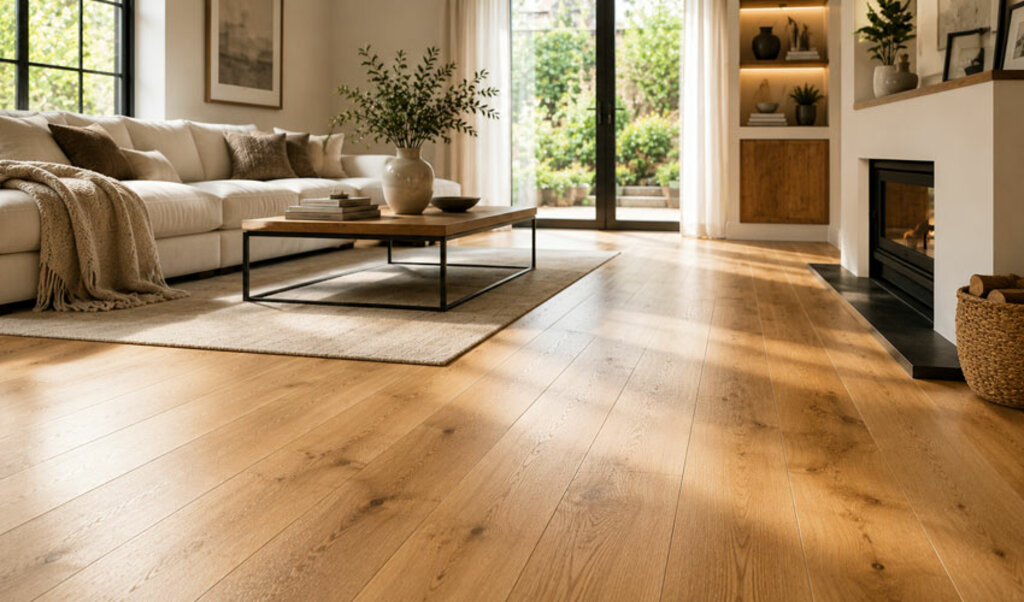
On the purely visual side, hardwax oil produces a more natural, open appearance. The grain of the wood is tactile; the surface has depth. Lacquer produces a more uniform, sealed surface that looks very clean and consistent. Neither is objectively better; the question is which suits your home and your taste.
Period properties and homes that use natural materials like stone, linen and leather tend to look more cohesive with an oil finish. Contemporary interiors with clean lines and minimal detail often suit the uniform quality of a well-applied matt lacquer. This is a generalisation with many exceptions, but it is a useful starting point.
Budget
Product cost for finishes is not the most significant variable in a floor finishing project; the labour cost is. A quality oil like Osmo Polyx-Oil costs slightly less per litre than Bona Traffic HD, but the difference in product cost over a typical room area is modest. The preparation and application labour is the same for both systems. Do not compromise on product quality to save money at the margins.
- High-traffic, high-moisture rooms: lacquer (Bona Traffic HD, Loba 2K Supra A.T.)
- Period properties, natural aesthetic preference: hardwax oil (Osmo Polyx-Oil, Woca Maintenance Oil range)
- Low maintenance commitment: lacquer
- Willing to do periodic maintenance: oil, for better repairability
- Two-component products for both: best performance in each category
The right finish is the one that fits the specific conditions of your floor and your household. There is no universally superior option. A lacquer in a busy hallway and an oil in a sitting room, chosen for different reasons, is often the most sensible approach in a whole-house project.
Common Questions About Choosing a Wood Floor Finish
Can I mix finishes in the same house — lacquer in some rooms, oil in others?
Yes — this is a common and sensible approach. Choosing the finish room by room, based on that room's traffic and moisture levels, often works better than picking one finish for the whole house.
Is hardwax oil worth it if I don't want to do regular maintenance?
Probably not — hardwax oil looks and feels more natural, but it depends on periodic maintenance coats to stay protected. If ongoing upkeep isn't realistic for your household, a lacquer finish will hold up better with minimal attention over time.
Does a more expensive finish always perform better?
Not necessarily on product cost alone — the difference in finish cost over a typical room is usually modest compared to labour. What matters more is choosing the right category of finish (lacquer vs oil, one-component vs two-component) for the room's actual use.