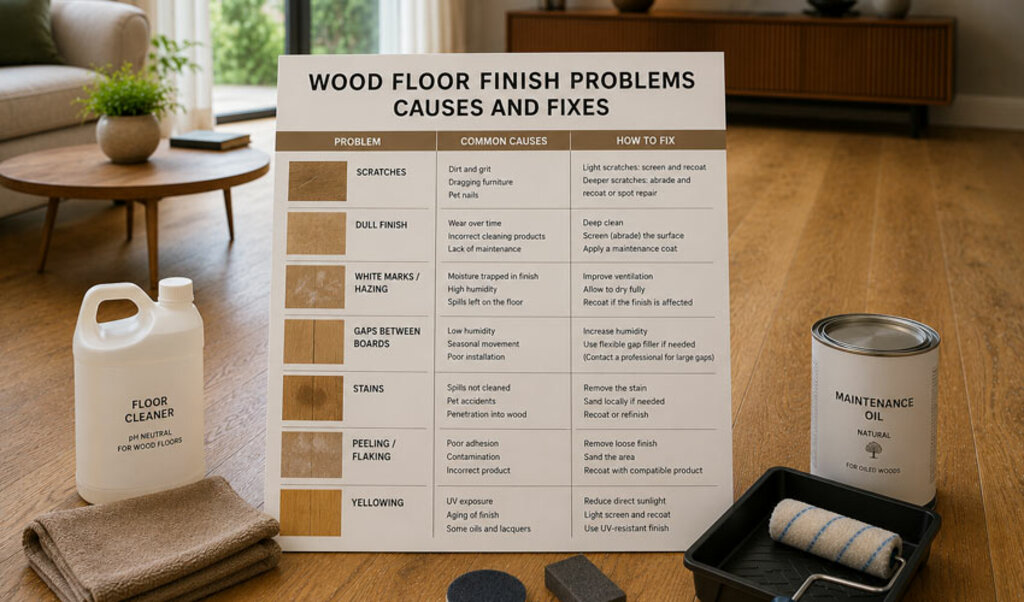
Even a carefully planned finishing job can run into problems — some show up immediately during application, others only become obvious once the floor is in use. Most of these issues have identifiable causes and, in many cases, practical fixes that don't mean starting over from bare wood. This guide covers the finish problems we hear about most often, what typically causes them, and what to do about each one.
Tackiness That Won't Fully Dry
A finish that stays soft, sticky or tacky well beyond its expected drying time is one of the more common complaints, and it usually comes down to one of a few causes.
Applying too thick a coat is the most frequent culprit — a heavy application takes far longer to dry than a thin, even one, and can remain tacky at the surface while the layer underneath is still curing. Poor ventilation or low temperature slows drying significantly, particularly with water-based lacquers, which need reasonable airflow and a room temperature above around 15°C to cure properly. High humidity has a similar effect, since water-based products rely on evaporation to cure.
If a coat has genuinely failed to dry rather than just being slow, the fix depends on how bad it is. A thin, slightly tacky coat may simply need more time, better ventilation, and patience. A genuinely soft, uncured coat may need to be lightly screened once it's firm enough to sand, then recoated properly — pushing ahead and walking on a tacky floor usually leaves permanent marks in the finish. Bona Retarder, added to a waterborne lacquer before application, can help avoid this in future by slowing drying just enough to prevent the surface skinning over before the coat has properly levelled.
Bubbling or Foaming in the Finish
Small bubbles trapped in a cured lacquer coat are usually a sign of over-agitation before or during application — vigorous stirring, shaking, or aggressive rolling can introduce air into the product, and if that air doesn't escape before the surface skins over, it's trapped permanently in the dried film.
Prevention is more reliable than cure here: stir gently rather than shake the product, avoid overworking an area once the lacquer has started to tack up, and use an applicator suited to the product (a lambswool or microfibre applicator generally introduces less air than an aggressive roller). If bubbling has already happened and cured into the finish, a light screening with a fine abrasive followed by a fresh coat is usually the fix — trying to "pop" bubbles once cured just damages the surrounding finish.
Cloudiness, White Haze or Blushing
A milky or hazy appearance in an otherwise clear lacquer — sometimes called blushing — is most often caused by moisture getting trapped in the film during curing, typically from high humidity or applying a coat over a surface that wasn't fully dry. It can also occur if a water-based lacquer is applied in cold, damp conditions where the water can't evaporate cleanly.
Mild blushing sometimes clears on its own as the finish continues to cure and humidity drops. If it doesn't, a light screening and recoat in better conditions (warmer, drier, better ventilated) usually resolves it. This is one of the clearest cases where checking the room's temperature and humidity before starting the job would have prevented the problem entirely.
A separate but related issue is a hazy, cloudy build-up on an already-finished floor that develops over time — this is usually a maintenance product issue rather than an application fault, often from over-applying a polish or refresher, or from a cleaning residue building up layer by layer. Bona Polish Remover is designed specifically to strip this kind of build-up back to the original finish.
Lap Marks and Uneven Sheen
Visible lines or bands where one application pass overlaps the next — lap marks — happen when a lacquer starts to dry before the next section is blended in, so the overlap area builds up thicker and shows a different sheen from the surrounding finish. This is more common in warm, dry conditions where fast-drying water-based lacquers skin over quickly, and more likely with an inexperienced applicator working too slowly across a large area.
Bona Retarder is the direct fix for this specific problem — it extends the open time of a waterborne lacquer, giving more time to maintain a wet edge across the room before the previous section starts to set. Working with the room's length rather than fighting awkward angles, and keeping a consistent pace across the whole area, also reduces the risk considerably. Once lap marks have cured into the finish, they generally need a light screening and fresh coat to disappear — they don't fade with wear.
Orange Peel Texture
A finish with a slightly bumpy, dimpled texture — resembling the surface of an orange — is typically caused by the product skinning over too quickly relative to how it was applied, trapping a slightly uneven surface as it cures. This is more common with spray application in the wrong conditions, but can occur with roller or brush application in warm, dry, high-airflow rooms too.
Slowing the dry time (again, a retarder additive can help), applying slightly thicker and more evenly, and avoiding excessive airflow directly over the wet surface during application all reduce the risk. An already-cured orange peel texture can usually be screened smooth and recoated.
Dust Nibs and Debris in the Finish
Small hard specks trapped in the cured coat are almost always airborne dust or debris settling into the wet finish before it skins over — sawdust from earlier sanding that wasn't fully removed, or general household dust if the room wasn't adequately sealed off and cleaned before application.
Thorough vacuuming and a final tack-cloth or damp-wipe pass immediately before applying each coat is the main prevention. Closing doors, minimising foot traffic through the room during application and drying, and covering or cleaning any HVAC vents blowing into the space all help too. Once cured, light dust nibs can often be knocked back with a fine abrasive between coats as part of the normal screening process; heavier contamination may need a more thorough screen and recoat.
Preventing Problems Before They Start
A few habits address most of the causes above at once:
- Check room temperature and humidity before starting — most water-based lacquers want somewhere around 15-25°C and moderate humidity
- Vacuum and tack-wipe thoroughly immediately before each coat, not just at the start of the job
- Stir gently rather than shake or aggressively agitate the product
- Work at a steady, consistent pace to maintain a wet edge, using a retarder in warm or dry conditions if needed
- Avoid direct airflow (fans, open windows, HVAC vents) blowing directly across the wet surface during application
- Allow proper drying time between coats rather than rushing to finish in a single day
Common Questions About Wood Floor Finish Problems
My lacquer is still tacky after 24 hours — what should I do?
Check the room's temperature and humidity first, since both slow drying significantly. If it's genuinely still soft rather than just slow, it likely needs to fully firm up before a light screening and recoat — walking on it while tacky will leave permanent marks.
Can I fix bubbles or dust nibs without recoating the whole floor?
Once cured into the finish, both usually need a light screening with a fine abrasive and a fresh coat over the affected area to disappear properly — they won't buff out or wear away on their own.
How do I stop lap marks from happening on my next project?
Use a retarder additive in warm or dry conditions to extend the lacquer's open time, and work at a steady pace to keep a wet edge across the room rather than letting sections dry before you blend the next pass in.
Is a cloudy or hazy finish always an application mistake?
Not always — cloudiness that develops later, after the floor's been finished for a while, is often from over-applied polish or cleaning residue rather than an application error, and can usually be corrected with a proper polish remover rather than resanding.